- BCA-registered contractor
- bizSAFE Level 4
- LEW-endorsed installations
- Sunday-Saturday, 24/7
- +65 8927 1658
- sales@bestvoltcontractors.com


EV Charger Installation in Singapore
Installing an EV charger is not simply a matter of mounting a charging unit and connecting it to the nearest power point.
The electrical supply, circuit capacity, installation location, protection, charger type and applicable Singapore requirements all need to be considered before the charger is put into use.
BestVolt Contractors provides electrical installation support for EV charging projects, helping property owners and businesses assess the electrical requirements, prepare the supply and coordinate the installation process.
- Load assessment
- Dedicated EV circuit
- LEW installation
- Testing & registration
Call or WhatsApp +65 8927 1658

Registrations and Certificates You Can Check


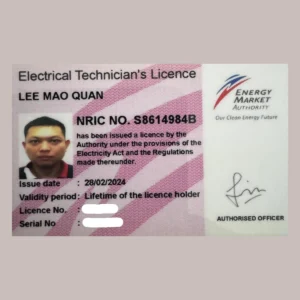




A Proper Electrical Setup for Your EV Charger
An EV charger can place a significantly different demand on an electrical installation compared with ordinary household appliances.
Before installation, it is important to understand whether the existing electrical system can support the charger and whether additional electrical work is required.
Depending on the property and charger, the project may involve:
- Electrical load assessment
- Dedicated EV charging circuit
- Cable routing
- Circuit protection
- Distribution board capacity checks
- Electrical loading upgrades where required
- Charger installation
- Testing and certification
- Registration requirements
For properties that need additional electrical capacity, our Electrical Loading & Power Supply Upgrade service may also be relevant.
When Do You Need EV Charger Installation?
The correct installation approach depends on where the charger will be used and the electrical capacity available at the property.
EV charger installation may be relevant when you
- Own an electric vehicle and want home charging
- Are upgrading a landed property’s electrical system for EV charging
- Want to install a charger at a condominium carpark
- Need charging infrastructure for a commercial property
- Operate an EV fleet
- Are planning electrical works for a development or facility
- Need a dedicated charging circuit instead of relying on ordinary household sockets
EV Charger Installation for Different Property Types
The installation process is not identical across every property. Landed homes, condominiums and commercial facilities each come with their own electrical and approval considerations.
Landed Homes
Landed properties can offer more control over the charging location and electrical installation, but the existing electrical supply still needs to be checked. The installation may require:
- A dedicated charging circuit
- Suitable cable routing from the distribution board to the parking area
- Appropriate circuit protection
- Assessment of available electrical capacity
- Charger installation and testing
For landed homes with larger electrical demands, an electrical loading assessment may also be required.
Condominiums & Private Apartments
EV charging in a condominium can involve additional considerations because the parking area and electrical infrastructure may be managed by the property or MCST. The installation may therefore require coordination around:
- Approved charging locations
- Common-area electrical infrastructure
- Cable routes
- Management requirements
- Charger deployment arrangements
- Electrical capacity
LTA notes that private residences may work with the property owner or management committee to obtain the necessary approvals for EV charger installation.
Commercial & Fleet Facilities
Businesses with EVs or commercial fleets may require more than a single charging point. The electrical design may need to consider:
- Number of chargers
- Vehicle charging schedules
- Available electrical capacity
- Distribution infrastructure
- Future expansion
- Charging demand during peak periods
For larger installations, the project should be planned around the facility’s existing electrical infrastructure rather than treating each charger as an isolated connection.
What Does EV Charger Installation Include?
The exact scope depends on the property and charger, but an electrical installation may include several stages.
Electrical Assessment
The existing electrical supply and distribution arrangement are reviewed to determine whether the proposed charger can be supported.
Dedicated Circuit
Where appropriate, the charger is connected through a dedicated circuit rather than treating it like a normal portable appliance.
Cable Installation
The required cable route is planned between the electrical distribution point and the charging location.
The route may involve concealed wiring, conduit or suitable surface protection depending on the property and installation conditions.
Circuit Protection
Appropriate protection should be provided as part of the electrical installation.
Charger Installation
The fixed EV charger is installed at the approved charging location according to the applicable requirements.
Testing & Certification
The completed installation is tested and the applicable certification requirements are addressed before the charger is put into use.
Each stage builds on the one before it. The charger itself is only one part of the installation — the supply, circuit, protection and cable route behind it matter just as much.
Do You Need an Electrical Loading Upgrade?
Not every EV charger installation requires a supply upgrade.
The answer depends on the existing electrical capacity, the charger’s power requirement and the other loads already connected to the property.
If the existing capacity is insufficient, the project may need an electrical loading or power supply upgrade rather than simply installing another circuit.
An assessment may consider
- Existing approved electrical load
- Current household or facility demand
- Charger power rating
- Other high-load appliances
- Available distribution-board capacity
- Number of EV chargers
- Future electrical requirements
For larger electrical requirements, see our Electrical Loading & Power Supply Upgrade service.
EV Charger Installation & Electrical Safety
An EV charger is part of the electrical installation, so the installation should be treated differently from simply plugging in an appliance.
Singapore’s LTA states that fixed EV chargers must be installed and certified according to the applicable requirements before registration. Fixed charger installation must be carried out by a Licensed Electrical Worker, while certification is carried out by a charger equipment specialist.
The charger itself must also be an approved model for the applicable use.
Before you buy and install
- Verify the charger is type-approved before purchase
- Use qualified professionals for installation and certification
LTA advises consumers to verify that EV chargers are type-approved before purchase and to use qualified professionals for installation and certification.
For wider electrical testing and compliance requirements, see our Electrical Testing, Inspection & Compliance service.
EV Charger Registration
Installation is only one part of the process.
For applicable EV chargers, registration with LTA is required before use. Fixed chargers need the relevant Certificate of Fitness from the installation and certification process for subsequent registration.
This means an EV charging project should be planned around:
- Choose an approved chargerStart with a charger model that is approved for the applicable use.
- Assess the electrical installationConfirm the existing supply and distribution can support it.
- Complete the required installationCarry out the circuit, cabling and charger installation.
- CertificationCertification by the appropriate qualified personnel.
- Register the chargerRegister the charger with LTA where required.
- Maintain the chargerMaintain it according to the applicable inspection requirements.
The exact requirements can depend on the charger and installation location.
Choosing the Right EV Charger Setup
The charger with the highest power rating is not automatically the right choice for every property.
For many residential users, overnight charging may provide sufficient charging time without requiring the highest available charging power.
For commercial or fleet applications, the charging strategy may need to be planned differently because several vehicles may need to charge within the same operating window.
The appropriate setup depends on
- Vehicle charging requirements
- Available electrical capacity
- Charging frequency
- Parking duration
- Property type
- Number of vehicles
- Existing electrical infrastructure
- Future charging requirements
EV Charger Installation Process
From understanding your charging requirement to registration and handover.
- Understand Your Charging RequirementThe vehicle, charger type, property and expected charging usage are reviewed.
- Assess the Electrical SupplyThe existing electrical capacity and distribution system are checked to determine whether the proposed installation can be supported.
- Plan the InstallationThe charger location, cable route, circuit requirements and installation method are determined.
- Carry Out Required Electrical WorksAny necessary circuit, cable, distribution or loading-related works are completed before the charger is installed.
- Install the EV ChargerThe charger is installed at the appropriate charging location.
- Testing & CertificationThe completed installation is tested and the applicable certification process is completed by the relevant qualified personnel.
- Registration & HandoverWhere required, the charger is registered with LTA and the relevant installation information is handed over to the owner.
EV Charging for Commercial & Fleet Use
Commercial EV charging can require a different approach from a single home charger.
A business may eventually need multiple charging points, higher electrical capacity or a charging arrangement that fits around vehicle operating schedules.
For larger commercial or industrial electrical requirements, the charging infrastructure should be planned together with the site’s wider electrical system.
Before expanding the charging infrastructure, consider
- How many vehicles need charging
- When vehicles are normally parked
- How much charging is required overnight
- Whether several chargers may operate simultaneously
- Available electrical capacity
- Future fleet expansion
- Space for additional charging points
EV Charger Installation for Future Expansion
If you are already carrying out electrical work at a property, it may be worth considering future EV charging requirements at the planning stage.
For example, a project may need to account for:
- Future additional chargers
- Spare distribution-board capacity
- Suitable cable routes
- Additional parking bays
- Increased electrical load
- Future fleet requirements
Planning these requirements early can avoid unnecessary electrical modifications later.
Why Proper Installation Matters
An EV charger operates as part of the property’s electrical system.
A suitable installation therefore needs to consider more than the charger itself. The electrical supply, circuit, protection, cable route, installation location and applicable certification requirements all form part of the overall setup.
Getting these elements right from the beginning can make the charging system more practical, reliable and easier to expand in the future.
Why Work With BestVolt Contractors?
EV charging projects sit at the intersection of vehicle charging requirements and electrical infrastructure.
That means the electrical side of the project needs to be planned around the actual property rather than using the same installation approach everywhere.
BestVolt Contractors can support the electrical side of EV charger projects by assessing the existing installation, planning the required electrical work and coordinating the installation around the property’s requirements.
Where additional capacity is needed, the EV charging project can also be considered alongside wider electrical loading upgrades rather than treating the charger as an isolated addition.
What Our Clients Say About Our Work
Real reviews from homeowners and businesses, pulled from our Google Business Profile.
Trustindex verifies that the original source of the review is Google. service is very good and patient. price very reasonable 100% recommend the teamPosted on GoogleTrustindex verifies that the original source of the review is Google. Great service! Super fast installation.Posted on GoogleTrustindex verifies that the original source of the review is Google. Fast and efficient changing of light bulb socket and installation of new PowerPoints. Thank you so much Best Volt. All of it took only 3 hours to change the whole house 14 power points! Would do so again.Posted on GoogleTrustindex verifies that the original source of the review is Google. Really great service alam and Jaman came down to my house for free quote and gave great advice. Conceal wiring, got me USB c plate, aluminum rail and install light steip. They made my vision come to life even though other contractors were apprehensive. They also helped to advise painters to cover up the work. 💯 Would recommend.Posted on GoogleTrustindex verifies that the original source of the review is Google. Masud and his colleagues had done a magnificent job on the rewiring of my HDB unit. A big thank you to them. I’m very please with the work carried out and even work late to complete the work.Posted on GoogleTrustindex verifies that the original source of the review is Google. I engaged Bestvolt contractors to rewired my HDB unit. Mr Masud and his colleagues had done a very good job. They were friendly, patience and willing to help to solve my many little request. They even responded promptly when I faced little problem after the job was completed. I would thank them for a marvelous job done. Well done!Posted on GoogleTrustindex verifies that the original source of the review is Google. It was an amazing job by (beastbolt contractor PTE ltd) I will definitely hire againPosted on GoogleTrustindex verifies that the original source of the review is Google. Have engaged Best Volt Contractor Pte Ltd to rewire my whole unit 4 room resale HDB. I am so surprised that they are so competent & knowledgeable. Especially the manager Mr Masud. He really did a good job & never disappointed me. I will definitely recommend it to othersPosted on GoogleTrustindex verifies that the original source of the review is Google. Masud, Jaman, and Sharful did an excellent job. They were responsible, responsive, and fully committed, even working late into the night to make sure everything was completed to a high standard. I really appreciate their dedication, and my family and I are glad we engaged them.
Frequently Asked Questions
How much does EV charger installation cost in Singapore?
The cost depends on the charger, installation location, cable distance, electrical work required and whether the existing electrical capacity is sufficient.
A straightforward installation and a project requiring new cable routes or an electrical loading upgrade can have very different costs.
Can I install an EV charger at my landed home?
EV chargers can be installed at appropriate parking locations at residential premises, subject to the applicable requirements. LTA states that residential EV chargers may only be installed or used where a vehicle may ordinarily park, such as a garage or carpark.
Can I install an EV charger in a condominium?
Yes, but condominium installations can involve property or management requirements in addition to the electrical installation itself.
The charging location, common-area infrastructure and applicable management approvals should be confirmed before installation.
Do I need to upgrade my electrical supply for an EV charger?
Not necessarily. It depends on the charger’s power requirement and the property’s existing electrical capacity and demand.
An electrical assessment should be carried out before deciding whether a loading upgrade is necessary.
Can an EV charger use a normal 13A socket?
A proper EV charging setup should not simply rely on an ordinary household socket without considering the applicable charging requirements and electrical safety.
LTA specifically advises against using adaptors, extension cords or 13A household sockets for EV charging.
Does an EV charger need to be installed by an electrician?
For fixed EV chargers in Singapore, LTA states that installation must be carried out by a Licensed Electrical Worker. Certification is carried out by a charger equipment specialist.
Does an EV charger need to be registered?
Applicable EV chargers need to be registered with LTA before use. Fixed chargers require the relevant certification documentation as part of the registration process.
Can I install more than one EV charger?
Multiple chargers may be possible, but the electrical capacity and distribution infrastructure need to be assessed.
For commercial or fleet applications especially, simultaneous charging demand should be considered before adding multiple charging points.
Related Services
If you are still scoping the project, these pages may also help.
Electrical Loading Upgrade
Additional supply capacity for higher-demand properties.
DB Box Upgrade
Distribution board upgrades and supporting electrical work.
Testing & Compliance
Electrical testing, inspection, LEW and submission support.
Landed House Rewiring
Rewiring and electrical upgrades for landed homes.
Planning an EV Charger Installation?
Whether you are installing a charger at a landed home, planning charging infrastructure for a condominium or preparing an EV charging setup for a business or fleet, the electrical requirements should be assessed before installation.
Talk to BestVolt Contractors about your EV charging requirements and the electrical work needed for your property.
- BESTVOLT CONTRACTORS PTE. LTD.
- 406 Pandan Gardens, #14-38, Singapore 600406
- Phone / WhatsApp: +65 8927 1658
- Email: sales@bestvoltcontractors.com
Discuss your EV charger installation
Tell us about the property, the charger you are considering and where you park, and we will get back to you.
Prefer to talk? Call or WhatsApp +65 8927 1658.