- BCA-registered contractor
- bizSAFE Level 4
- LEW-endorsed installations
- Sunday-Saturday, 24/7
- +65 8927 1658
- sales@bestvoltcontractors.com


Condo Rewiring in Singapore planned around your unit, renovation and building rules
Rewiring a condo is not always as straightforward as rewiring a standalone home. The electrical work has to fit the unit’s existing wiring, renovation plans and layout, while also taking into account the building’s management requirements and practical site restrictions.
If you are renovating a condo, replacing ageing wiring or planning a new electrical layout, BestVolt Contractors can help you plan the rewiring scope around the actual requirements of your unit.
Call or WhatsApp +65 8927 1658

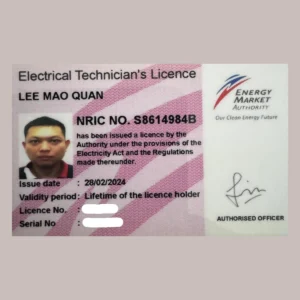
Registrations and Certificates You Can Check






Condo Rewiring Is About More Than Replacing Wires
When people look for condo rewiring in Singapore, they are often thinking about replacing the existing wiring. The real question is usually broader: what needs to change in the unit, and how should the electrical work be carried out without creating problems during the renovation?
The exact scope depends on the unit, the existing installation and what you plan to change.
A condo rewiring project may involve
- Existing wiring assessment
- New lighting points
- Additional power points
- Appliance points
- Air-conditioning-related requirements
- Concealed wiring
- Surface wiring or trunking where appropriate
- DB box-related work
- Electrical loading considerations
- Coordination with renovation work
- Testing after installation
When Does a Condo Need Rewiring?
There is no single age at which every condo needs to be rewired.
A specific electrical problem does not automatically mean the entire unit needs rewiring either. Depending on the condition of the installation, a targeted upgrade may be more appropriate — which is why the existing setup and planned renovation should be reviewed before the final scope is decided.
Rewiring may be considered when
- The existing wiring is old
- You are carrying out a major renovation
- The electrical layout no longer suits how you use the unit
- You need significantly more electrical points
- New appliances require changes to the electrical setup
- Existing wiring needs replacement or improvement
- You want to move from a surface installation to a concealed arrangement where practical
- The electrical system needs to accommodate planned upgrades
Condo Rewiring During Renovation
For many condo owners, rewiring becomes part of a larger renovation — and that is where early electrical planning matters most. Before walls are closed, carpentry is installed or finishing work begins, it is worth deciding where you will actually need each point.
A workstation may need more sockets than originally planned. A renovated kitchen may require additional appliance points. A feature wall may need lighting points that were not in the original layout. Planning these requirements early reduces changes once the renovation has progressed.
Decide early where you need
- Power points
- Lighting points
- Switches
- TV points
- Workstation sockets
- Kitchen appliance points
- Washing machine and dryer connections
- Air-conditioning-related points
- Other dedicated appliance connections
Condo Management & MCST Requirements
One of the key differences between condo rewiring and other residential projects is the building’s management environment. Renovation and electrical works may be subject to requirements set by the management or MCST, and the rules are not the same for every development.
Requirements can relate to
- Permitted working hours
- Contractor access
- Renovation schedules
- Common-area protection
- Material movement
- Noise-generating work
- Work involving building infrastructure
- Access to risers or shared areas
- Submission or approval procedures
Before work starts, establish
- What electrical work is planned
- Whether the work affects only the unit or also shared building areas
- Whether management notification or approval is required
- What working hours apply
- Whether there are restrictions on hacking or other renovation activities
- How contractor access will be arranged
Riser Access & Condo Electrical Work
Risers can be an important consideration in condominium projects. A riser may contain building services and electrical or other infrastructure that is not treated in the same way as the private areas inside an individual unit.
Electrical work involving or near a riser may therefore require additional coordination. If your rewiring plan involves changes around a riser, the site conditions and relevant building requirements should be established before installation begins.
Concealed Wiring for Condos
Concealed wiring is often considered during condo renovation because homeowners want the finished interior to look clean and uncluttered. It is not simply a cosmetic choice — it can involve wall preparation, wiring routes, coordination with renovation work, hacking or chasing where permitted, reinstatement, final socket and switch positions, and coordination with carpentry and built-ins.
For that reason, concealed wiring should be planned before finishing work rather than treated as an afterthought.
Concealed Wiring vs Trunking
Not every condo project requires all wiring to be concealed. Depending on the property and renovation conditions, surface wiring with suitable trunking may be the more practical option.
| Consideration | Concealed wiring | Trunking / surface installation |
|---|---|---|
| Appearance | Cleaner finished appearance | More visible |
| Wall work | May require additional preparation | Usually less wall preparation |
| Renovation coordination | Needs early planning | Can be simpler in some situations |
| Accessibility | Less accessible after finishing | Easier to access |
| Future changes | May involve more work | Generally easier to modify |
| Suitability | Useful when a clean integrated finish is required | Useful where access and practicality are priorities |
The choice should be based on the actual site, renovation scope and building requirements. There is no reason to conceal wiring simply for the sake of it if another installation method suits the project better.
Electrical Points for a Condo Renovation
A condo rewiring project is a good time to review whether your existing electrical points still make sense. Think about how each room will be used after renovation — the final arrangement should follow the actual appliance and furniture layout.
Living Room
- TV and media equipment
- Floor or table lamps
- Charging points
- Feature lighting
- Additional sockets around seating areas
Bedrooms
- Bedside sockets
- Lighting controls
- Work or study areas
- Charging points
- Additional appliance requirements
Kitchen
- Refrigerator
- Oven
- Hob-related equipment
- Microwave
- Dishwasher
- Hood
- Small appliances
Study / Work Area
- Computer
- Monitor
- Printer
- Router
- Chargers
- Other equipment
DB Box & Electrical Loading
Rewiring does not automatically mean the DB box needs to be replaced. However, if your renovation involves a significant change in electrical demand, the existing distribution board and electrical loading may need to be reviewed. This becomes relevant when adding:
- Multiple high-load appliances
- Additional air-conditioning requirements
- New circuits
- Major kitchen equipment
- Other significant electrical loads
If a DB box upgrade is required, it should be treated as part of the wider electrical planning rather than as an isolated replacement.
Older & Recently Occupied Condo Units
Older condo unit. An older unit may be undergoing a major renovation, and the existing electrical installation may no longer suit the new layout. Rewiring can be considered alongside the renovation rather than waiting until electrical problems become obvious.
Recently occupied or newer unit. A newer unit may not require complete rewiring simply because you are renovating. Your requirements may instead involve additional points, lighting changes or appliance connections.
Either way, the electrical scope should follow the actual condition and requirements of the unit.
Condo Rewiring Process
Every project is different, but the process usually starts with understanding the unit and the work you want to carry out.
- Discuss the Renovation or Electrical RequirementsTell us what you are planning, including any renovation work, new appliances or electrical changes.
- Review the Existing Electrical SetupThe existing wiring, electrical points, DB box and other relevant parts of the installation are considered during the site assessment.
- Plan the Electrical LayoutPower points, lighting, appliance connections and wiring routes are planned around the finished layout.
- Confirm the Installation MethodConcealed wiring and surface or trunking options are considered based on the site and renovation requirements.
- Coordinate With Building RequirementsManagement or MCST procedures, access arrangements and working restrictions are addressed before work begins.
- Carry Out the Electrical WorkThe agreed electrical works are carried out according to the project scope and schedule.
- Testing & HandoverThe completed installation is tested and the relevant handover requirements are addressed.
How to Prepare for Condo Rewiring
You do not need every technical detail figured out before contacting an electrician, but a basic renovation plan makes the discussion far more useful. Before the site visit, it helps to know:
- Your condo unit type and approximate layout
- Whether you are doing a full renovation
- Which walls or areas will be changed
- Your planned kitchen layout
- Air-conditioning requirements
- Major appliances you intend to install
- Where you expect your TV or work area to be
- Whether you prefer concealed wiring
- Any requirements already provided by your condo management
A floor plan is also useful when planning electrical points and wiring routes.
What a Condo Rewiring Quote Should Cover
When comparing quotations, avoid looking only at the total figure. A useful quotation should make the scope reasonably clear. Depending on the project, check whether it covers:
- Wiring replacement
- Number of lighting points
- Number of power points
- Switches and sockets
- Appliance points
- Concealed wiring
- Trunking or surface installation
- DB box work
- Additional circuits
- Testing
- Any hacking or reinstatement work
- Other renovation-related electrical work
Condo Rewiring Cost in Singapore
There is no useful one-size-fits-all price for condo rewiring. Two units can have very different electrical requirements even when they are similar in size, so a quotation based on the actual scope is more useful than a generic per-unit estimate.
The cost can be affected by
- Unit size and layout
- Existing wiring condition
- Number of electrical points
- Number of circuits
- Concealed vs surface wiring
- Amount of wall preparation
- Renovation scope
- Appliance requirements
- DB box requirements
- Electrical loading requirements
- Site and building restrictions
Electrical Testing After Rewiring
Testing is an important part of completing electrical work. After rewiring or electrical modifications, the installation should be checked according to the applicable requirements and project scope.
Depending on the work involved, this may include checking the installation, circuits and protective devices before handover. Where specific testing, endorsement or compliance requirements apply, these should be considered as part of the project from the beginning.
Why Condo Rewiring Needs Proper Planning
The electrical work itself is only one part of a condo renovation. The bigger challenge is coordinating the electrical layout with everything else happening inside the unit.
A socket location can affect carpentry. A concealed wiring route can affect wall preparation. An appliance location can affect the electrical point. And the work schedule may need to fit the condominium’s management requirements. Planning these details early gives you a clearer scope before the renovation reaches the finishing stage.
Condo Rewiring Questions We Often Get
How much does condo rewiring cost in Singapore?
The cost depends on the unit, existing electrical installation, number of points, wiring method, renovation scope and any additional electrical work required. A site-based quotation is far more useful than one fixed price for every condo. You can also view our rewiring prices.
Does a condo always need full rewiring during renovation?
No. A renovation does not automatically mean the entire electrical installation needs to be replaced. The existing setup and the planned changes should be assessed first.
Can I have concealed wiring in a condo?
Concealed wiring may be possible depending on the unit, renovation scope and building requirements. It normally needs to be planned before finishing work begins.
Can I use trunking instead of concealed wiring?
In some situations, yes. Surface installation with suitable trunking can be a practical alternative where accessibility, renovation limitations or site conditions make it more appropriate.
Do I need MCST approval for condo rewiring?
Requirements vary between developments and depend on the work involved. Your building’s management or MCST requirements should be checked before work starts, particularly where renovation rules, access, working hours or common areas are involved.
Can rewiring be done while I am renovating the condo?
Yes. Renovation is often the stage when homeowners review and update their electrical layout. The electrical work should be coordinated with the renovation sequence.
Does rewiring include the DB box?
It can, but DB box replacement is not automatically required with every rewiring project. The existing DB box and electrical requirements are assessed separately.
Should I plan electrical points before carpentry?
Yes. Electrical points should ideally be planned before fixed carpentry and finishing work are completed — especially for kitchens, built-in cabinets, TV walls and work areas.
How long does condo rewiring take?
The duration depends on the size of the unit, electrical scope, number of points, wiring method and renovation conditions. Building management restrictions can also affect the working schedule.
Can you coordinate electrical work with my renovation contractor?
Yes. Electrical work can be planned around the renovation sequence so that wiring, points and finishing work are properly coordinated.
Recent Condo Projects
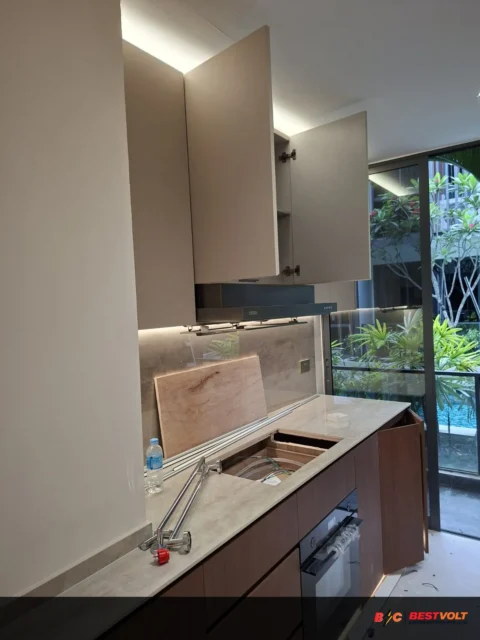
Condo rewiring and lighting work carried out with MCST approval, concealed wiring and DB upgrades. Open any project to see the site photos and full scope.
 CondoCondominium
Condo Rewiring & DB Upgrade - Affinity at Serangoon
40 Affinity Serangoon North, Condo- MCST approval managed
- Full concealed wiring
 CondoCondominium
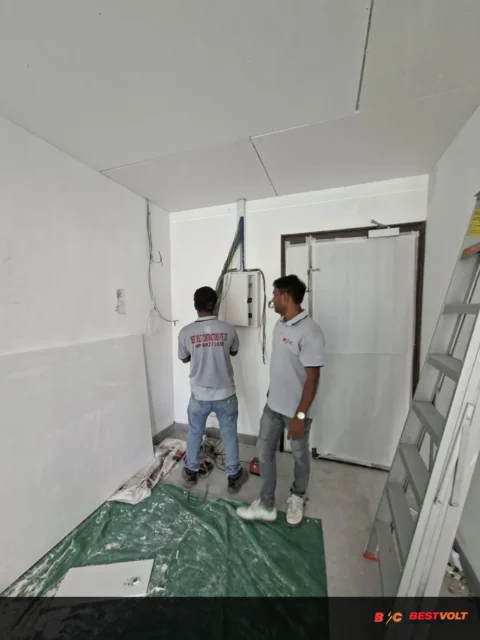
Orchid Park Condo - Full Rewiring & Power Points
81 Yishun Street 81, Orchid Park Condo- Full unit rewiring
- DB upgrade with 2nd RCCB
 CondoCondominium
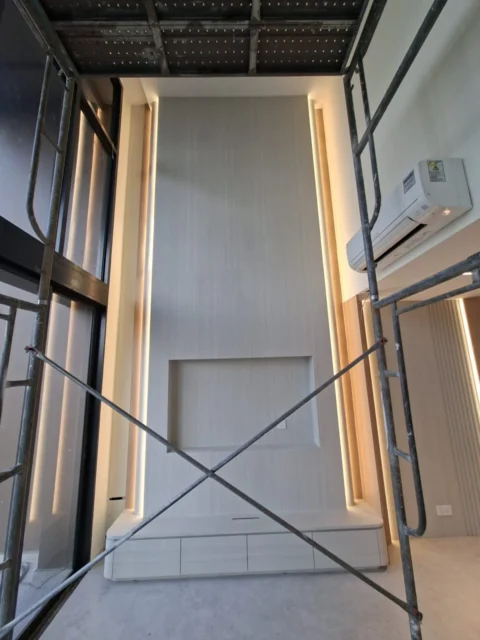
Double-Volume Feature Lighting & LED Cove
Private condominium, double-volume living, Singapore (address not published)- Recessed feature niche with a vertical LED cove each side
- Scaffold carried to mezzanine height for the double volume
 CondoCondominium
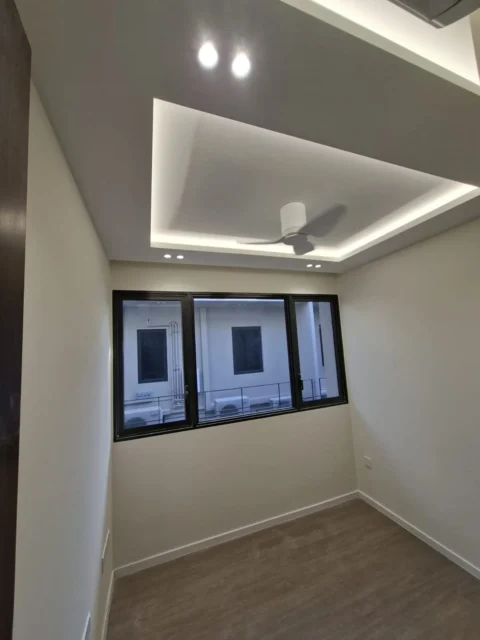
Bedroom Cove Ceiling, Fan Point & Switch Drops
Private condominium, bedrooms and hallway, Singapore (address not published)- Finished cove ceiling with fan and downlights, three-panel window
- Second room: full-height window, cove, fan, two-gang switch
What Our Clients Say About Our Work
Real reviews from homeowners and businesses, pulled from our Google Business Profile.
Trustindex verifies that the original source of the review is Google. service is very good and patient. price very reasonable 100% recommend the teamPosted on GoogleTrustindex verifies that the original source of the review is Google. Great service! Super fast installation.Posted on GoogleTrustindex verifies that the original source of the review is Google. Fast and efficient changing of light bulb socket and installation of new PowerPoints. Thank you so much Best Volt. All of it took only 3 hours to change the whole house 14 power points! Would do so again.Posted on GoogleTrustindex verifies that the original source of the review is Google. Really great service alam and Jaman came down to my house for free quote and gave great advice. Conceal wiring, got me USB c plate, aluminum rail and install light steip. They made my vision come to life even though other contractors were apprehensive. They also helped to advise painters to cover up the work. 💯 Would recommend.Posted on GoogleTrustindex verifies that the original source of the review is Google. Masud and his colleagues had done a magnificent job on the rewiring of my HDB unit. A big thank you to them. I’m very please with the work carried out and even work late to complete the work.Posted on GoogleTrustindex verifies that the original source of the review is Google. I engaged Bestvolt contractors to rewired my HDB unit. Mr Masud and his colleagues had done a very good job. They were friendly, patience and willing to help to solve my many little request. They even responded promptly when I faced little problem after the job was completed. I would thank them for a marvelous job done. Well done!Posted on GoogleTrustindex verifies that the original source of the review is Google. It was an amazing job by (beastbolt contractor PTE ltd) I will definitely hire againPosted on GoogleTrustindex verifies that the original source of the review is Google. Have engaged Best Volt Contractor Pte Ltd to rewire my whole unit 4 room resale HDB. I am so surprised that they are so competent & knowledgeable. Especially the manager Mr Masud. He really did a good job & never disappointed me. I will definitely recommend it to othersPosted on GoogleTrustindex verifies that the original source of the review is Google. Masud, Jaman, and Sharful did an excellent job. They were responsible, responsive, and fully committed, even working late into the night to make sure everything was completed to a high standard. I really appreciate their dedication, and my family and I are glad we engaged them.
Related Services
If you are still comparing options for your project, these pages may also help.
Electrical Rewiring Services
Full and partial rewiring scopes, methods, testing and handover.
Residential Rewiring
Rewiring for homes across Singapore, from planning to handover.
HDB Rewiring
3-room, 4-room and 5-room flat rewiring and renovation wiring.
Prices & Packages
What affects an electrical rewiring quotation in Singapore.
Plan Your Condo Rewiring Before the Renovation Gets Too Far
If you are renovating a condo, electrical planning is much easier before the walls, carpentry and finishes are completed. Whether you need complete rewiring, additional electrical points, concealed wiring or electrical upgrades, the first step is understanding what your unit actually requires. Share your renovation plans and we can discuss the scope before work begins.
- BESTVOLT CONTRACTORS PTE. LTD.
- 406 Pandan Gardens, #14-38, Singapore 600406
- Phone / WhatsApp: +65 8927 1658
- Email: sales@bestvoltcontractors.com
Request a condo rewiring site survey
Tell us your unit type and what you are planning, and we will get back to you to arrange a visit.
Prefer to talk? Call or WhatsApp +65 8927 1658.