- BCA-registered contractor
- bizSAFE Level 4
- LEW-endorsed installations
- Sunday-Saturday, 24/7
- +65 8927 1658
- sales@bestvoltcontractors.com


Concealed Wiring in Singapore neat electrical wiring, conduit & trunking solutions
Planning a renovation, adding new electrical points or replacing old wiring, but want the finished installation to look clean?
BestVolt Contractors provides concealed wiring for residential and commercial properties, with suitable surface trunking and conduit solutions where concealed installation is not practical. We assess the existing layout, cable routes, access and renovation conditions before recommending the method.
Call or WhatsApp +65 8927 1658

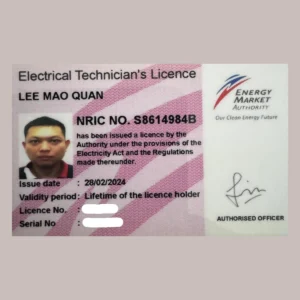
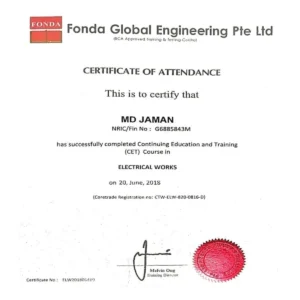
Registrations and Certificates You Can Check





What Is Concealed Electrical Wiring?
Concealed wiring means electrical cables are routed inside walls, ceilings or other concealed spaces so the finished installation has less visible cabling.
It is not simply about hiding cables. The electrical circuit, cable route, protection and future access requirements all need to be considered together, and the method depends on the property, wall construction, renovation stage and route.
Commonly considered when
- A property is undergoing renovation
- New electrical points are being added
- Existing wiring is being replaced
- Walls or ceilings are already being opened
- You want a cleaner finished appearance
- Circuits need rerouting as part of a larger project
When Is Concealed Wiring a Good Option?
It is most useful when the electrical layout is being changed as part of a renovation or rewiring.
During a Home Renovation
If walls and ceilings are already being opened, cables can be planned before plastering, carpentry and final finishes — so power points, lighting and appliance circuits sit around the final room layout.
When Rewiring an Older Property
Older wiring may need to be replaced or reorganised. Concealed installation can form part of a wider rewiring project where the property conditions allow it.
When Adding New Electrical Points
Additional sockets, switches or appliance points can sometimes be routed through concealed wiring rather than leaving cables exposed. See power point installation.
When You Want a Cleaner Finish
For homeowners and businesses concerned about visible cabling, concealed wiring gives a cleaner finished appearance where the installation conditions allow it.
Concealed Wiring vs Surface Trunking
There is no single method that works for every property. The choice depends on the renovation stage, wall access, building restrictions, cable route and the finish you want.
| Installation method | Best suited for | Main consideration |
|---|---|---|
| Concealed wiring | Renovations, open walls and planned rewiring | Requires suitable wall or ceiling access |
| Surface trunking | Finished walls or areas where hacking is impractical | Cables stay accessible but visible within trunking |
| Conduit / protective routing | Specific cable routes and installation conditions | Route and enclosure depend on the site |
The site survey is what settles this. We look at the actual walls, routes and restrictions before recommending concealed installation, trunking or a mix of both across different areas.
Concealed Electrical Wiring for Renovation
Renovation is usually the easiest time to plan electrical wiring, because the layout can be coordinated with the rest of the project.
Plan before carpentry and finishes. Electrical work should be coordinated before permanent cabinetry, ceilings and other finishes go in — that is what keeps finished surfaces from being reopened later. The layout should follow the final furniture and appliance plan rather than being decided after the renovation is done.
Plan these positions first
- Power points
- Lighting points
- Switches
- Air-conditioner circuits
- Water heater points
- Kitchen appliance circuits
- Dedicated appliance circuits
- Other required electrical connections
Concealed Wiring by Property Type
This page focuses on the wiring method itself; property-specific rewiring scope is covered on the dedicated pages.
HDB Flats
Concealed wiring can be used where the installation conditions and applicable renovation requirements allow it. Key considerations: wall and ceiling access, proposed cable routes, new point locations, renovation timing, hacking requirements, existing wiring condition and the DB box arrangement. For the full scope, see HDB rewiring.
Condominiums & Apartments
Condo work brings extra practical considerations: management requirements, permitted working hours, existing routes, riser access, renovation coordination, whether hacking is permitted and alternative trunking routes. Where concealed wiring is not practical, trunking avoids unnecessary wall works. See condo rewiring.
Landed Properties
Landed homes involve longer routes, multiple floors and more extensive layouts — multiple rooms, different floors, kitchen and utility areas, outdoor points, gate and lighting circuits, air-conditioning, water heaters and other dedicated circuits. See landed house rewiring.
Surface Trunking When Concealed Isn’t Practical
Concealed installation is not always the right solution. Hacking a wall or ceiling can be impractical because of:
- Finished surfaces
- Renovation restrictions
- Building management requirements
- Access limitations
- Existing wall conditions
- The need to minimise disruption
In these situations, cables can be routed neatly through suitable trunking rather than left loose or exposed. Where appropriate, aluminium rail or other neat surface-routing solutions may also be considered.
Trunking Installation Singapore
A good trunking installation should do more than cover the cables. The route is planned around:
- Wall and ceiling lines
- Doors and openings
- Furniture
- Existing electrical points
- Future access
- Cable protection
- Overall appearance
For commercial premises, routes are also coordinated with the operating environment and other building services. The goal is an installation that stays accessible without cluttering the finished space.
What Does Concealed Wiring Installation Include?
The exact scope depends on the project, but a typical job covers these six parts.
Electrical Layout Planning
We identify where new points, switches and appliance circuits are required, and determine practical cable routes for them.
Cable Routing
Cables are routed through suitable concealed paths or surface trunking according to the agreed installation method.
New Electrical Points
The scope can include new power points, switches and lighting points where required.
Dedicated Appliance Circuits
Where the appliance and electrical design require it, dedicated circuits can be incorporated for air-conditioners, water heaters, ovens or induction hobs.
DB and Circuit Work
Where concealed wiring forms part of a larger rewiring project, the board and circuit arrangement are reviewed alongside the new wiring. See DB box upgrade.
Testing and Handover
The completed installation is tested as part of the electrical works, with circuit identification and documentation where applicable.
Concealed Wiring Cost in Singapore
The cost depends heavily on the actual site and installation method, so a concealed wiring project should not be priced only by the number of sockets or metres of cable.
A proper scope accounts for the complete installation, including cable routing and the associated electrical work.
Cost factors
- Property type
- Number of circuits
- Number of electrical points
- Cable length
- Wall and ceiling access
- Concealed or surface installation
- Hacking and reinstatement requirements
- Existing wiring condition
- DB box condition
- Renovation stage
- Access and working restrictions
Concealed Wiring vs Rewiring
These two terms are related, but they are not the same thing.
Rewiring describes replacing or installing electrical wiring and circuits across part or all of a property. Concealed wiring describes how the cables are routed and installed.
A full rewiring project can use concealed wiring, while a smaller upgrade may only need concealed routing for a few new points. Keeping the distinction clear keeps the scope clear before work begins.
Concealed Wiring and DB Box Upgrades
A new wiring layout should work together with the distribution board that feeds it. New circuits, additional points and dedicated appliance connections all rely on the board having suitable space, protection and circuit arrangement.
Where the wiring work adds circuits or changes the electrical demand, the board is reviewed alongside it rather than after the walls are closed.
How the Installation Is Planned
The method is decided from the site, not assumed in advance.
- Site SurveyWe look at the walls, ceilings, existing routes, access and renovation stage before recommending anything.
- Confirm the Wiring MethodConcealed routing, surface trunking, conduit or a mix across different areas, based on what the site allows.
- Plan Points and RoutesPoint positions and cable routes are set around the final furniture, appliance and cabinetry layout.
- Install the WiringCables, points and switches are installed according to the agreed method and sequence with other trades.
- Reinstatement Where NeededWhere hacking or chasing was involved, the affected surfaces are made good as agreed in the scope.
- Test and Hand OverThe completed installation is tested, with circuit identification and documentation where applicable.
Concealed Wiring Questions We Often Get
What is concealed wiring?
Concealed wiring means the electrical cables are routed inside walls, ceilings or other concealed spaces so the finished installation has little or no visible cabling.
Is concealed wiring possible in every property?
Not always. It depends on wall and ceiling access, the renovation stage, building or management restrictions and the cable route. Where it is not practical, surface trunking is usually the better option.
Concealed wiring or trunking — which is better?
Neither is better in general. Concealed wiring gives a cleaner finish but needs suitable access and reinstatement; trunking keeps cables accessible and avoids hacking. The site survey decides which suits each area.
Does concealed wiring require hacking?
It can involve wall chasing or hacking depending on the wall construction and route, along with reinstatement afterwards. Where that is undesirable, an alternative route or trunking is considered instead.
When should concealed wiring be planned in a renovation?
Before carpentry, ceilings and finishes go in. Once surfaces are closed, adding concealed routes usually means reopening finished work.
How much does concealed wiring cost in Singapore?
It depends on the property, number of circuits and points, cable length, access, hacking and reinstatement, and the condition of the existing installation — so it is quoted from the actual scope rather than per socket.
Is concealed wiring the same as rewiring?
No. Rewiring is about replacing or installing circuits; concealed wiring is about how the cables are routed. A rewiring project may use concealed wiring, trunking, or both.
Recent Concealed Wiring Projects
Homes where the wiring was chased into walls or run through ceilings before the finish went on.
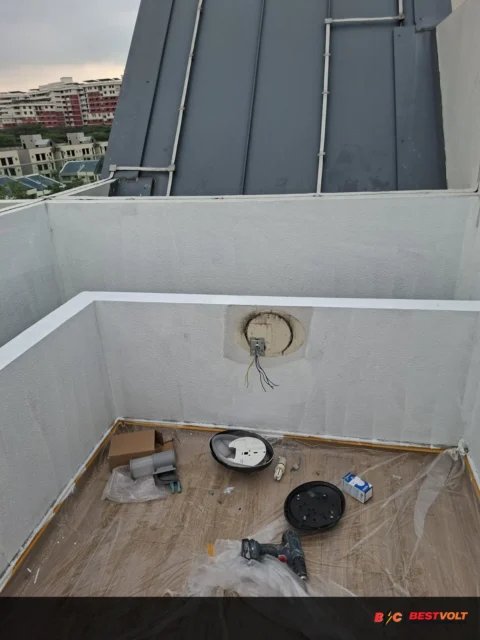 LandedLanded House
Full House Rewiring - Jade Residences - Lew Lian Vale
1 Lew Lian Vale, Jade Residences, Singapore- Full rewiring across 3 storeys
- 2x DB box upgrade with RCCB
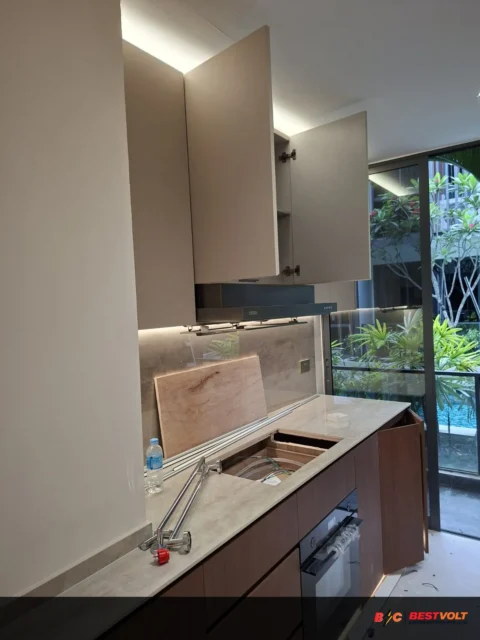 CondoCondominium
Condo Rewiring & DB Upgrade - Affinity at Serangoon
40 Affinity Serangoon North, Condo- MCST approval managed
- Full concealed wiring
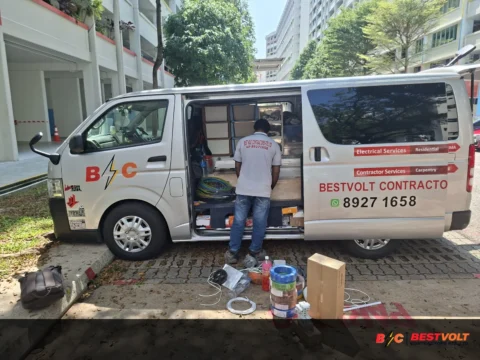 HDBHDB - 4 Room
4-Room HDB Resale Full Rewiring - Pasir Ris
244 Pasir Ris Street 21, HDB- HDB hacking permit applied
- Full concealed wiring
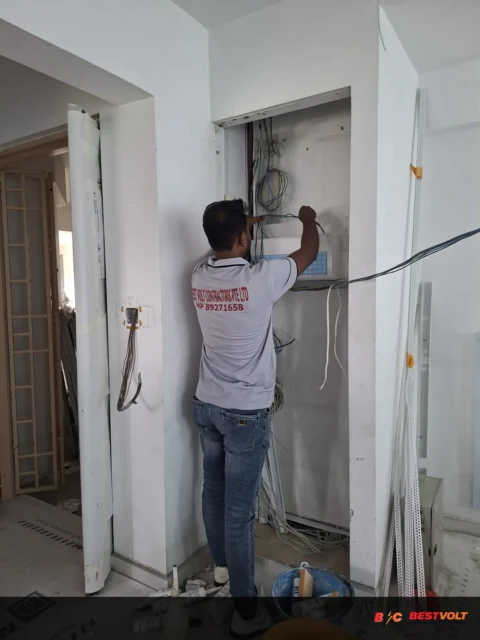 HDBHDB - 4 Room
HDB Rewiring - Punggol Drive 635A
Blk 635A Punggol Drive, HDB- Full concealed rewiring
- DB with RCCB
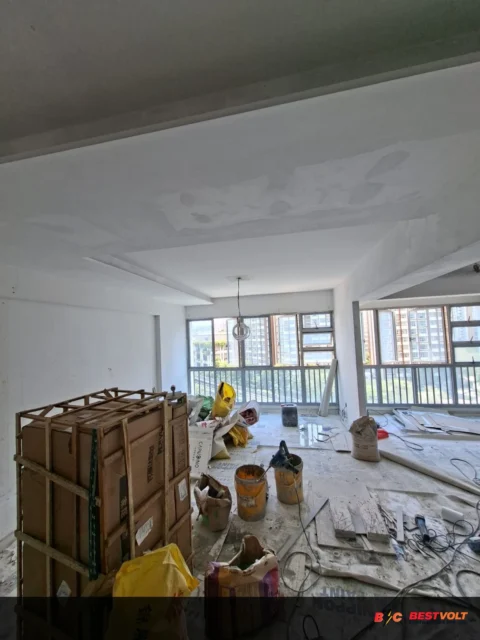 HDBHDB - BTO 4 Room
BTO New Wiring - Tampines North Drive 1
Blk 609A Tampines North Drive 1, BTO- Bare unit new wiring
- Concealed conduit
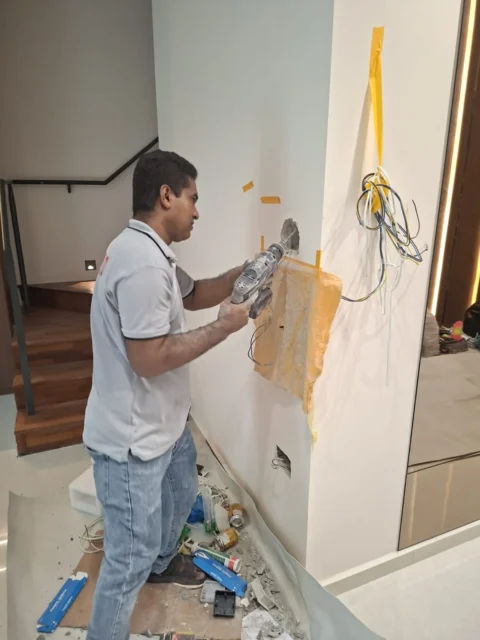 ResidencePrivate residence
Concealed Wiring, Chasing & Smart Switch
Private residence, Singapore (address not published)- Wall chase cut, with paper catch and tape at the opening
- Rotary-hammer chasing, stair and kitchen of this house in frame
What Our Clients Say About Our Work
Real reviews from homeowners and businesses, pulled from our Google Business Profile.
Trustindex verifies that the original source of the review is Google. service is very good and patient. price very reasonable 100% recommend the teamPosted on GoogleTrustindex verifies that the original source of the review is Google. Great service! Super fast installation.Posted on GoogleTrustindex verifies that the original source of the review is Google. Fast and efficient changing of light bulb socket and installation of new PowerPoints. Thank you so much Best Volt. All of it took only 3 hours to change the whole house 14 power points! Would do so again.Posted on GoogleTrustindex verifies that the original source of the review is Google. Really great service alam and Jaman came down to my house for free quote and gave great advice. Conceal wiring, got me USB c plate, aluminum rail and install light steip. They made my vision come to life even though other contractors were apprehensive. They also helped to advise painters to cover up the work. 💯 Would recommend.Posted on GoogleTrustindex verifies that the original source of the review is Google. Masud and his colleagues had done a magnificent job on the rewiring of my HDB unit. A big thank you to them. I’m very please with the work carried out and even work late to complete the work.Posted on GoogleTrustindex verifies that the original source of the review is Google. I engaged Bestvolt contractors to rewired my HDB unit. Mr Masud and his colleagues had done a very good job. They were friendly, patience and willing to help to solve my many little request. They even responded promptly when I faced little problem after the job was completed. I would thank them for a marvelous job done. Well done!Posted on GoogleTrustindex verifies that the original source of the review is Google. It was an amazing job by (beastbolt contractor PTE ltd) I will definitely hire againPosted on GoogleTrustindex verifies that the original source of the review is Google. Have engaged Best Volt Contractor Pte Ltd to rewire my whole unit 4 room resale HDB. I am so surprised that they are so competent & knowledgeable. Especially the manager Mr Masud. He really did a good job & never disappointed me. I will definitely recommend it to othersPosted on GoogleTrustindex verifies that the original source of the review is Google. Masud, Jaman, and Sharful did an excellent job. They were responsible, responsive, and fully committed, even working late into the night to make sure everything was completed to a high standard. I really appreciate their dedication, and my family and I are glad we engaged them.
Related Electrical Services
Wiring method is usually one part of a wider electrical scope.
Electrical Rewiring Services
Full and partial rewiring scopes, methods, testing and handover.
Power Point Installation
Additional sockets, USB and 15A points, water heater switches.
DB Box Upgrade
Distribution board upgrade, RCCB protection and circuit labelling.
Testing & Compliance
LEW inspection, testing, endorsement and submissions.
Want a Neater Electrical Installation?
Whether you want concealed wiring for a renovation, neat trunking for a finished space, or a mix of both across different areas, the right method starts with the site. Tell us the property type, the renovation stage, which areas are involved and the finish you want — and we will recommend the method and send an itemised quotation based on the actual scope.
- BESTVOLT CONTRACTORS PTE. LTD.
- 406 Pandan Gardens, #14-38, Singapore 600406
- Phone / WhatsApp: +65 8927 1658
- Email: sales@bestvoltcontractors.com
Request an itemised quote
Tell us the property, the areas involved and the renovation stage, and we will advise the wiring method.
Prefer to talk? Call or WhatsApp +65 8927 1658.