In this guide5 sections
A power socket not working can be caused by a switched-off outlet, a faulty appliance, a blown plug fuse, a tripped circuit breaker or a problem with the socket’s wiring. In Singapore homes, identifying whether the problem affects one socket or several electrical points can help narrow down the possible causes. However, a damaged or faulty socket should always be treated carefully because electrical faults can create a risk of electric shock or fire.
If a wall socket suddenly stops supplying electricity, do not immediately assume that the socket itself needs replacing. The problem may originate from the connected appliance, its plug, the electrical circuit or the socket outlet. Understanding the warning signs can help you decide when to stop using the affected point and arrange an inspection by a qualified electrical professional.
Common Reasons a Power Socket Stops Working
Is the Problem Caused by the Appliance or Plug?
One possible explanation for a socket that appears to have no power is a problem with the appliance or its plug rather than the wall outlet.
For example, an appliance may have a damaged power cord, an internal electrical fault or a blown fuse in its fused plug. Singapore commonly uses Type G plugs, which typically contain a replaceable fuse. A faulty fuse can prevent an appliance from operating even when the wall socket is working normally.
If the affected socket looks undamaged and there are no warning signs, check whether its own switch is turned on. You can also check the appliance manufacturer’s instructions for any basic user-level checks.
Do not remove a plug fuse cover or attempt repairs unless the appliance instructions permit the task and you can complete it safely. If the plug, cable or socket is unusually hot, discoloured, damaged or emitting a burning smell, stop using the equipment instead of testing it further.
Could a Tripped Circuit Breaker or Faulty Wiring Be Responsible?
A socket may stop working because the circuit supplying it has been interrupted. This can happen when a protective device trips following an overload or an electrical fault.
If several sockets or electrical points stop working at the same time, the problem may involve a shared circuit rather than one individual outlet. A fault in the wiring, a loose connection or a damaged socket can also interrupt the power supply.
Another possible cause is deterioration inside the socket itself. Worn internal contacts, damaged terminals or heat-related damage can affect its ability to maintain a reliable electrical connection.
According to the Energy Market Authority’s Electrical Safety Guidance, consumers should engage Licensed Electrical Workers (LEWs) for electrical installation, maintenance and repair work. The guidance also warns against using cracked or broken power points and overloading sockets.
For additional information on maintaining electrical accessories and wiring in HDB flats, refer to the official HDB Electrical Accessories and Wiring Guide.
Note
A socket that has stopped working may still have an underlying electrical fault even if there are no visible signs of damage. Never remove the faceplate, touch internal wiring or attempt to tighten electrical terminals yourself.
Steps to Take When Your Power Socket Stops Working
1. Identify Whether One Socket or Several Are Affected
Start by observing whether the problem affects a single socket, several sockets in the same room or electrical points throughout your home.
If only one socket has stopped working, the cause may be a switched-off outlet, a faulty appliance, a plug fuse or a defect within that particular socket.
If multiple sockets stop working together, a tripped circuit breaker or another circuit-related problem may be responsible.
Record which electrical points are affected and whether the interruption happened after using a particular appliance. This information can help an electrician understand the symptoms without requiring you to investigate the wiring yourself.
If there is smoke, a burning smell, visible damage, unusual heat or sparking, stop using the affected area and skip further checks.
2. Check the Socket Switch and Appliance Safely
If the socket appears normal, is cool to the touch and shows no signs of damage, check whether its external switch is in the ON position.
You may also check the appliance’s normal operating controls and inspect its power cord visually for obvious damage without handling exposed conductors.
Only when there are no warning signs, you may use a known-working, low-power appliance to help distinguish an appliance problem from a socket problem. Do not carry out this check if the outlet feels hot, is loose, has burn marks, smells unusual or has previously produced sparks.
Never insert tools into an outlet, remove the socket cover, probe electrical contacts or touch exposed wires. If the socket remains without power after basic external checks, stop troubleshooting and arrange an inspection.
3. Arrange a Professional Inspection for Persistent Problems
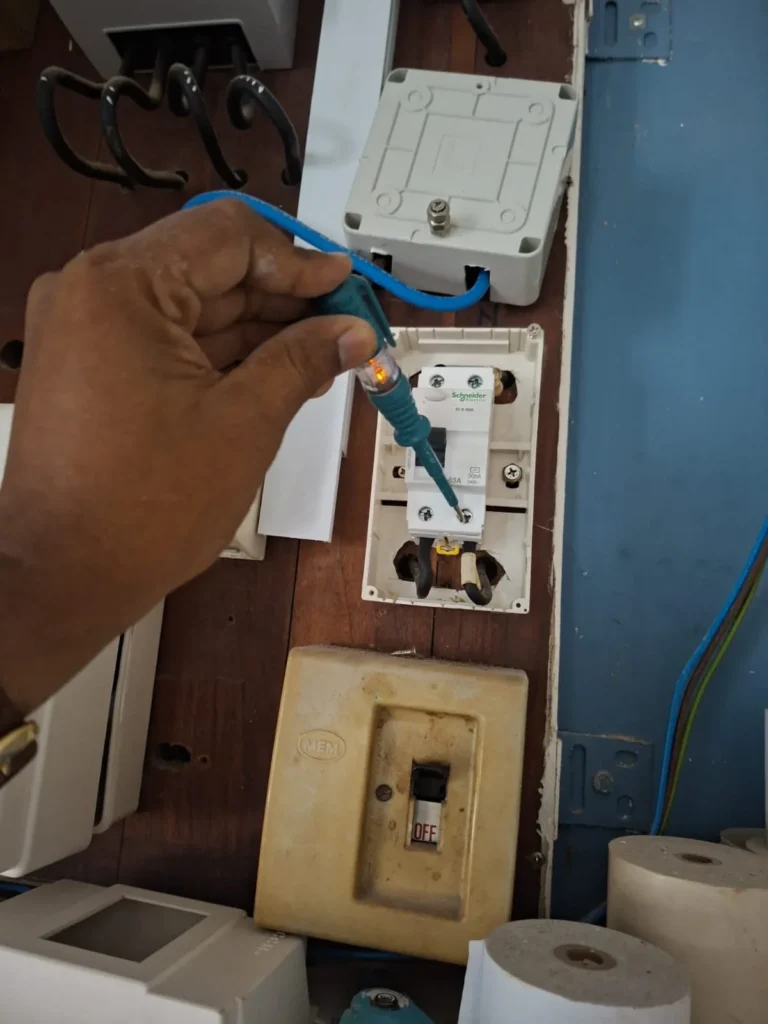
If the outlet remains inoperative, works intermittently or shows signs of damage, contact a licensed electrical professional.
The inspection may include checking the socket outlet, relevant wiring, electrical connections, circuit protection and the connected appliance where appropriate. Suitable testing is needed to distinguish a faulty accessory from a circuit-level or wiring problem.
Depending on the findings, the solution might involve correcting an appliance-related issue, replacing a damaged socket, repairing an electrical connection or addressing a problem elsewhere in the circuit.
The appropriate repair should be determined by the actual fault, not by replacing parts at random. Ask for an explanation of the findings and a quotation for the recommended work before authorising repairs.
When Should You Call an Electrician for a Faulty Power Socket?
You should arrange a professional inspection if a power socket not working continues to be a problem after safe external checks, particularly if other electrical symptoms appear at the same time.
Although a switched-off outlet or faulty appliance may have a simple explanation, an outlet that has deteriorated internally can present a serious safety risk. Intermittent power, loose plug retention, unusual heat and visible damage should not be ignored.
Watch for these warning signs:
- The socket stops supplying power repeatedly or works only intermittently.
- A plug feels unusually loose in the outlet or fails to remain securely connected.
- The socket, faceplate or connected plug becomes unusually hot.
- You notice burning smells, scorch marks, cracks, melted plastic, buzzing or sparking.
- Several sockets stop working together or the circuit breaker repeatedly trips.
Safety
If you notice smoke, sparks, a burning smell, a hot socket or melted plastic, stop using the outlet immediately. Do not touch the damaged equipment, remove the faceplate or attempt to restore power. Keep people away from the affected area and contact a licensed electrician. If there is an active fire or immediate danger, evacuate and contact the appropriate emergency services.
Does a Non-Working Socket Mean the Electrical Wiring Needs Replacement?
Not necessarily. A single outlet that has stopped working does not automatically mean that the property’s entire electrical installation needs replacement.
If the issue is caused by a faulty appliance, blown plug fuse or damaged socket accessory, the required solution may be limited to that component. A professional assessment can determine whether the wiring behind the outlet is also affected.
However, if multiple sockets experience recurring faults, connections show signs of overheating or an electrician identifies deteriorated insulation, further electrical work may be needed.
Older HDB flats and properties undergoing renovation may benefit from an assessment of the existing electrical installation when recurring problems appear. Depending on the condition of the wiring, the appropriate solution could range from a localised repair to partial or complete rewiring.
Do not assume that replacing the socket alone will resolve every problem. If the original cause is a damaged connection or an underlying circuit fault, the electrician should address that issue as part of the repair.
For installation changes, additional power points, wiring extensions, socket replacement and related electrical work, follow the applicable requirements and engage an appropriately licensed professional.
- Related Guide: Circuit Breaker Keeps Tripping
- Related Guide: Why Are My Lights Flickering?
- HDB Rewiring Singapore
Comparison of Common Power Socket Problems
| Option | Best for | Typical scope |
|---|---|---|
| Appliance or plug inspection | One appliance fails to operate while other equipment works normally | Checking the appliance, power cord and plug for visible defects |
| Plug fuse assessment | An appliance with a fused plug stops working unexpectedly | Determining whether a fuse or another appliance component is faulty |
| Socket outlet inspection | One wall socket has no power or works intermittently | Inspecting the outlet and its relevant electrical connections |
| Circuit fault assessment | Several sockets stop working or a protective device trips | Checking the affected circuit and relevant protective equipment |
| Wiring and rewiring assessment | Recurring faults or deterioration in the existing installation are suspected | Assessing wiring condition and recommending suitable repairs or rewiring |
Frequently Asked Questions
Why is my power socket not working when the other sockets work?
If other sockets are working normally, the issue may involve the affected outlet, its switch, the connected appliance or its plug fuse. A fault affecting one socket does not necessarily mean the entire circuit has failed. If the cause is not obvious after safe external checks, arrange a professional inspection.
Why does my wall socket have no power even though the switch is on?
Possible causes include a tripped circuit breaker, a faulty socket outlet, a loose electrical connection or a problem elsewhere in the circuit. The switch position alone cannot confirm that the socket is receiving electricity. Avoid removing the cover or testing the internal contacts yourself.
Can a blown plug fuse cause a socket to appear faulty?
Yes. A blown fuse inside a fused appliance plug can prevent that appliance from operating even when the wall outlet is working. Check the manufacturer’s guidance for appropriate user-level checks. If the plug or cable is damaged, hot or discoloured, discontinue use and seek professional assistance.
Is it safe to continue using a loose or hot power socket?
No. A loose or unusually hot outlet can indicate worn contacts, a poor connection or overheating. Stop using it and arrange an inspection. Do not wedge the plug into position, use adaptors to compensate for a loose fit or attempt to tighten the internal components yourself.
Do I need a licensed electrician to replace a power socket in Singapore?
Electrical work involving the installation, repair, modification or replacement of electrical socket outlets should be carried out by an appropriately licensed electrical worker in accordance with Singapore’s requirements. You can refer to the EMA guidance on engaging Licensed Electrical Workers for further information.
When should I seek urgent electrical assistance for a faulty socket?
Seek prompt professional assistance if the socket is damaged, becomes hot, produces a burning smell or sparks, or causes repeated circuit interruptions. If smoke, fire or immediate danger is present, keep away from the equipment, evacuate when necessary and contact the appropriate emergency services.
Need Help With a Faulty Power Socket?
If your power socket is not working, BestVolt Contractors can help assess the electrical issue and recommend appropriate next steps. Arrange a site survey to discuss an unresponsive wall outlet, intermittent power, suspected wiring faults or damaged socket accessories in your Singapore property.
This guide is general information and is not a substitute for professional inspection.